


How AI Is Powering the Sustainable Future of Our Planet
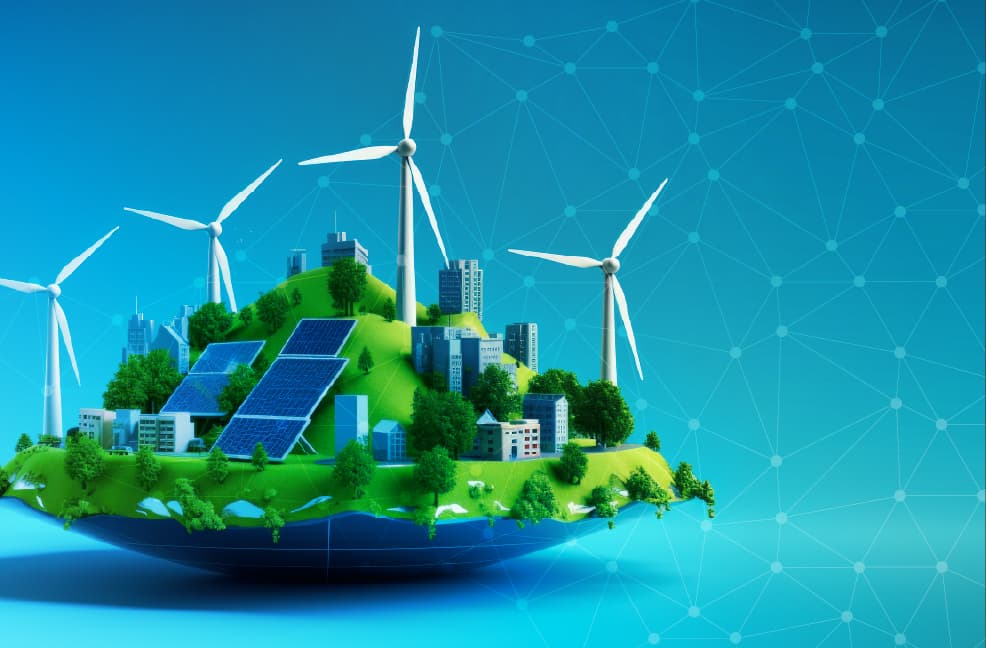
Artificial Intelligence isn’t just powering smart cities or automating industries. It’s quietly becoming one of the most effective tools in the fight against climate change. From tracking deforestation to predicting energy demand and preserving biodiversity, AI is helping protect the planet and make sustainability scalable. We must reduce greenhouse gas emissions and transition to renewable energy sources to protect our planet and future generations. However, the hope for a sustainable future lies in conservation and innovation. Here’s how.
What Is Sustainability and Why Does AI Matter?
Sustainability is crucial for ensuring that future generations can enjoy a quality of life comparable to ours. The United Nations has established17 Sustainable Development Goals(SDGs) as a roadmap to tackle global challenges like poverty, inequality, climate change, environmental degradation, peace, and justice.
AI plays a growing role in this landscape. By analyzing massive datasets, spotting patterns humans miss, and making data-driven recommendations, AI enables smarter decision-making at every level. It helps cities become more energy-efficient, industries become cleaner, and farmers become more productive—all while reducing waste and emissions. Whether you're a policymaker, an enterprise leader, or a conservationist, AI can serve as a real-time compass for sustainability.Just as AI helps cities, industries, and farmers make smarter choices, large language models are transforming how businesses connect with their customers.
How Is AI Used in Smart Energy Management?
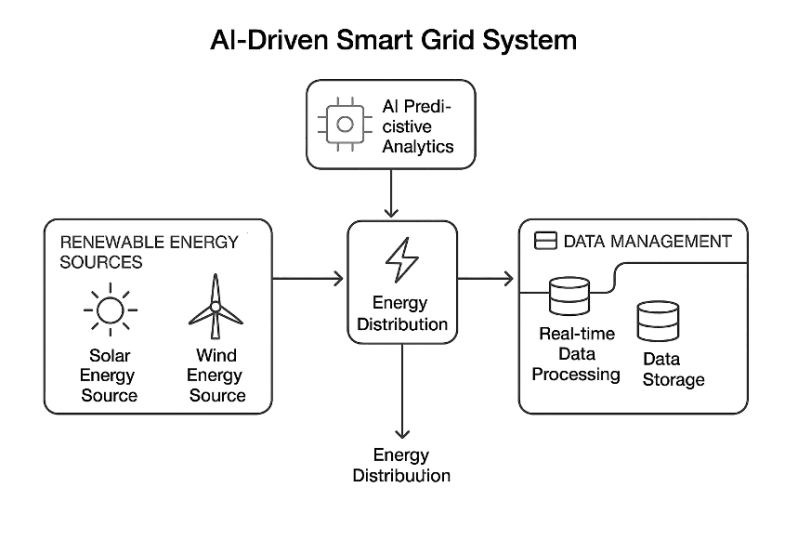
AI is transforming how we produce, distribute, and consume energy, and not in some distant future. It's already transpiring. Take energy forecasting. Traditional systems often rely on static models and historical averages, which aren’t good at handling volatility, especially with renewable sources like solar and wind. AI, on the other hand, can ingest real-time weather data, grid performance, and consumption patterns to make precise energy demand predictions. That means fewer blackouts, less energy waste, and better integration of renewables into national grids.
Then there’s optimization. AI can identify inefficiencies across the energy lifecycle, such as a solar farm underperforming on cloudy days or a building using more HVAC power than necessary. Companies like Google used AI to cut cooling energy in their data centers by 40%—proof that machine learning can lead to real-world efficiency gains.
Smart energy management is about control. AI empowers energy providers and consumers to respond in real-time, make informed decisions, and move toward a more sustainable and balanced energy future.
Smart Grids and How They Work with AI
Smart grids are intelligent electricity networks that respond dynamically to demand and supply. Here’s what AI brings to the table:
Real-time optimization:
AI forecasts power usage and adjusts distribution instantly.Advanced Metering Infrastructure (AMI):
Gives consumers and providers detailed, real-time data to control usage and costs.Predictive maintenance:
AI detects faults and anomalies early, reducing downtime and improving reliability.
Smart grids are essential for integrating variable energy sources like wind and solar, balancing sustainability with system resilience.
How Is AI Being Used to Protect Forests?
Forests are vital carbon sinks but face increasing threats from illegal logging and wildfires.
Satellite analysis:
AI processes imagery to detect deforestation in real time.Wildfire prediction:
Deep learning models use weather and historical fire data to predict high-risk areas.Acoustic monitoring:
AI can detect chainsaws and trucks in remote forests using sound, even before satellite images catch changes.
These technologies enable faster intervention and better forest conservation.
Role of AI in Sustainable Farming and Biodiversity?
Farming is moving beyond guesswork. With climate variability and increasing pressure on food systems, agriculture needs to be not just productive but precise, and that’s exactly what AI enables.
By combining data from sensors, drones, and weather stations, AI models help farmers understand soil conditions, plant health, and optimal watering times. This precision agriculture approach leads to higher yields while conserving water and reducing reliance on chemical fertilizers and pesticides. It’s more food with less footprint.
But AI isn’t just supporting growing crops, it’s also helping save species. Conservationists are now using AI-powered camera traps that automatically identify animals in their habitats. Whether it’s tracking the migration of elephants or monitoring nesting sites for endangered birds, AI gives researchers detailed insights without disturbing the ecosystem.
This dual role, which enhances food security and preserves biodiversity, shows how powerful AI can be when applied thoughtfully to the natural world.
How Is AI Helping Us Understand and Protect Oceans?
Oceans regulate Earth’s climate and support marine life, but they’re under stress from pollution and overfishing.
AI is addressing this in several ways:
Autonomous underwater vehicles (AUVs):
Monitor temperature, acidity, and marine activity.Smart sensors:
Track ocean health indicators like coral bleaching and oxygen levels.Illegal fishing detection:
Predictive models analyze vessel routes to flag suspicious activity and alert authorities.
This proactive approach helps protect marine ecosystems and maintain fish populations.
How Is AI Helping Us Understand and Protect Oceans?
Oceans cover more than 70% of our planet, regulate its temperature, and support entire ecosystems. But their health is declining fast due to pollution, illegal fishing, rising temperatures, and acidification. AI is helping scientists and conservationists dive into these problems with tools that are both precise and scalable.
Autonomous underwater vehicles (AUVs), guided by AI, can now monitor changes in ocean temperatures, salinity, and acidity over time. These smart machines scan marine environments without disturbing them, collecting valuable data about coral reefs, fish populations, and plankton movement. Combined with AI-powered sensors, this data helps researchers understand how climate change is affecting life beneath the surface.
One of the most practical applications of AI in ocean conservation is tackling illegal fishing. Predictive algorithms analyze vessel routes, movement patterns, and speed anomalies to detect suspicious activity. When a ship veers off-course near a protected zone or displays erratic behavior, AI systems flag it in real time, giving coast guards and authorities the heads-up they need to act fast.
Can AI Predict Natural Disasters and Climate Trends?
Traditional climate models require massive computing power. AI speeds this up while improving accuracy.
- AI-enhanced models predict hurricanes, floods, and sea-level rise faster.
- Governments use these insights to issue early warnings and plan resilient infrastructure.
- Resource allocation becomes more targeted in drought- and flood-prone areas.
AI helps turn big climate data into actionable strategies that save lives and reduce economic damage.
Ethical Concerns of Using AI for the Environment
We can’t ignore the risks. As we deploy AI to solve environmental problems, it must be done ethically.
That means:
- Using transparent, explainable models
- Involving local communities in tech design
- Ensuring data privacy and responsible use
- Avoiding bias or short-sighted optimization that harms ecosystems
Responsible AI development is key to long-term sustainability
How Can Businesses Use AI to Advance Sustainability Goals?
Consumers want cleaner products. Regulators are tightening the screws. Investors are rewarding companies with strong ESG (Environmental, Social, Governance) performance. And AI is helping businesses stay ahead of all three.
Companies use AI to cut waste across the supply chain, monitor carbon emissions in real time, and automate reporting processes for ESG compliance. AI tools can optimize delivery routes, flag inefficient production processes, and even predict equipment failures before they lead to resource loss.
Take manufacturing, for example. AI models can identify where raw materials get wasted, suggest energy-saving opportunities, or simulate different scenarios to make operations more sustainable without sacrificing profitability. In agriculture, retailers are using AI to reduce food waste by forecasting demand more accurately, improving shelf-life management, and minimizing overproduction.
Ultimately, businesses that embrace AI not just for efficiency but for environmental accountability will be the ones shaping the future economy.
Take A Smarter Path to Sustainable Future with AI
AI is not a silver bullet for climate change. But it is a powerful accelerant, making solutions faster, smarter, and more scalable. Whether it’s predicting natural disasters, improving energy use, or protecting endangered ecosystems, the technology is proving its value in nearly every corner of the sustainability conversation.
At Rialtes, we help organizations develop AI systems that make sustainability practical. From concept to execution, we partner with enterprises to apply AI ethically and effectively, turning climate ambition into action.
Talk to our experts to learn how AI can unlock your sustainability potential, drive measurable impact, and help build a better future for both business and the planet.
FAQs: Role of AI in Powering the Sustainable Future of Our Planet
Latest Blogs